| Sign In | Join Free | My infospaceinc.com |
|
| Sign In | Join Free | My infospaceinc.com |
|
| Categories | Fused Quartz Plate |
|---|---|
| Brand Name: | ZMSH |
| Place of Origin: | SHANGHAI,CHINA |
| MOQ: | 10 |
| Payment Terms: | T/T |
| Delivery Time: | 2-4 weeks |
| Density: | 2.2 g/cm³ |
| Mohs Hardness: | 7.2 |
| Melting Point: | 1750℃ |
| Annealing Temperature: | 1150℃ |
| Softening Point: | 1680℃ |
| Thermal Conductivity: | 1.4 W/m·℃ |
| Deformation Point: | 1280℃ |
| Annealing Point: | 1210℃ |
| Flexural Strength: | 6.7 ×10⁷ N/m² |
| Poisson's Ratio: | 0.14–0.17 |
| Specific Heat Rate: | 670 J/kg·℃ |
| Company Info. |
| SHANGHAI FAMOUS TRADE CO.,LTD |
| Verified Supplier |
| View Contact Details |
| Product List |
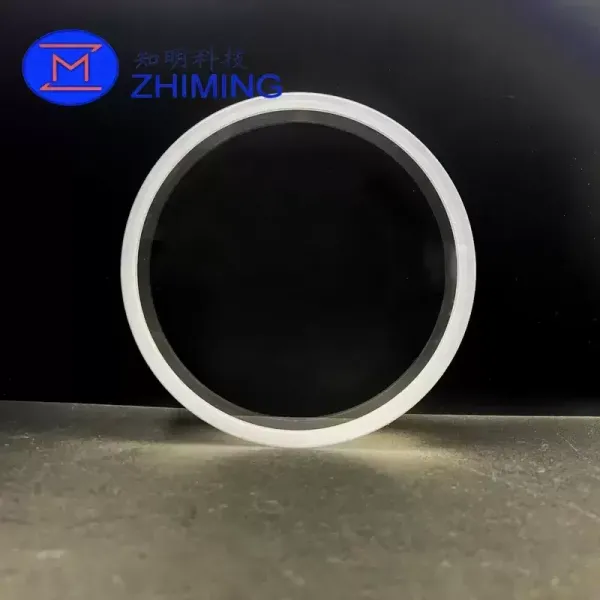
Our UV grade fused silica quartz windows are precision-engineered for applications requiring exceptional optical clarity, thermal stability, and chemical resistance. Designed for advanced optical systems, photonics, semiconductor processing, and high-temperature industrial equipment, these windows offer reliable performance across UV, visible, and near-infrared wavelengths (180–2500 nm) with transmittance exceeding 90%.
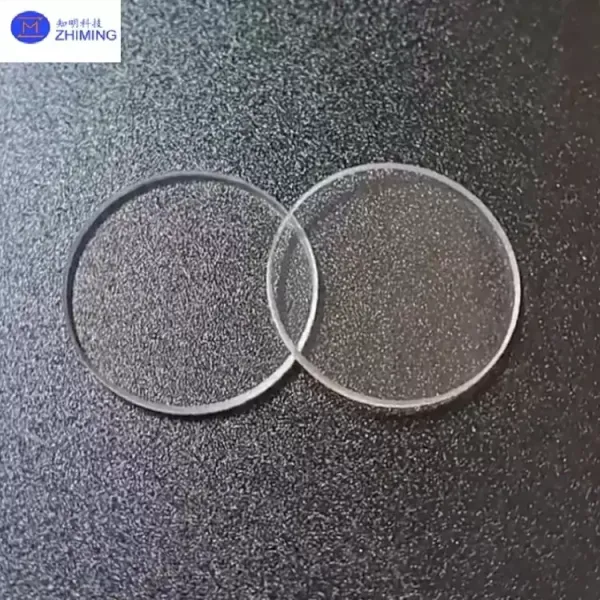
Standard windows are manufactured in JGS1 type, with custom JGS2 and JGS3 types available upon request. Thicknesses are typically 3–4 mm, but can be customized to meet specific application requirements. Size customization is also available to suit specialized optical, laboratory, or industrial setups.
Featuring a combination of low thermal expansion, high mechanical strength, and excellent chemical resistance, these windows maintain stability under high temperatures, thermal cycling, and harsh operating conditions. They are ideal for applications where precision, durability, and optical performance are critical.


| Parameter | Value |
|---|---|
| Density | 2.2 g/cm³ |
| Mohs Hardness | 7.2 |
| Coefficient of Thermal Expansion (0–1000℃) | 5.4 ×10⁻⁷ |
| Melting Point | 1750℃ |
| Annealing Temperature | 1150℃ |
| Softening Point | 1680℃ |
| Thermal Conductivity | 1.4 W/m·℃ |
| Deformation Point | 1280℃ |
| Annealing Point | 1210℃ |
| Flexural Strength | 6.7 ×10⁷ N/m² |
| Poisson's Ratio | 0.14–0.17 |
| Specific Heat Rate | 670 J/kg·℃ |
| Strain Point | 1120℃ |
| Resistivity | 7 ×10⁷ Ω·cm |
| Insulation Strength | 5 ×10⁷ V/m |
| Dielectric Absorption Coefficient | <4×10⁴ |
| Dielectric Loss Coefficient | <1×10⁴ |
| Refractive Index | 1.45845 |
| Tensile Strength | 4.8 ×10⁷ N/m² |
| Compressive Strength | 1.1 ×10⁹ N/m² |
| Dielectric Constant | 3.7–3.9 |
| Young’s Modulus | 7.2 ×10¹² N/m² |
| Rigid Modulus | 3.1 ×10³ MPa |
| Long-Term Use Temperature | 1100℃ |
| Short-Term Usage Temperature | 1300℃ |
| Hot Working Temperature | 1750–2050℃ |
UV grade fused silica quartz windows are ideal for scientific, industrial, and optical applications:
These windows combine high optical transmission, mechanical strength, and thermal stability, ensuring reliable performance in both laboratory and industrial environments.

UV grade fused silica quartz windows are the optimal choice for precision optics, high-temperature processes, and industrial systems where clarity, durability, and stability are critical.
1. Can these quartz windows withstand rapid temperature changes?
Yes, the low coefficient of thermal expansion (5.4×10⁻⁷, 0–1000℃)
ensures minimal thermal stress, allowing windows to tolerate rapid
heating and cooling without cracking.
2. Are the quartz windows suitable for high-power UV laser
applications?
Absolutely. With transmittance >90% across 180–2500 nm and
excellent thermal stability, these windows transmit UV laser energy
effectively while maintaining structural integrity.
3. Can I customize the size and thickness for my equipment?
Yes, these windows can be tailored to exact requirements, including
custom thicknesses beyond the standard 3–4 mm and JGS type
(JGS1/JGS2/JGS3) for specialized optical or industrial systems.
4. How resistant are these windows to chemicals and harsh
environments?
They offer excellent chemical resistance to most acids and
industrial chemicals, making them suitable for laboratory,
semiconductor, and industrial processes.
5. Can these windows be used for long-term high-temperature
applications?
Yes, they can withstand long-term usage up to 1100°C and short-term
exposure up to 1300°C, providing reliable performance under
demanding thermal conditions.
Related Product

|
 Custom Design Quartz Boats for Semiconductor Processing
High-Purity Fused Silica Window Quartz Crystal Glass Diameter 35.04mm Thickness 2.95mm
Optical Quartz Glass JGS1 / JGS2 / JGS3 for UV, Visible and Infrared Optical Systems
Fused Quartz Tubes Optical Glass Tubes SiO2 Tubes Transparent Pipe JGS1 JGS2 Customized
G.657.A2 Bend Insensitive Single Mode Optical Fiber with Low Attenuation for FTTH Networks
Quartz Optical Fused Silica Glasses JGS1, JGS2, JGS3
120 X 120mm Fused Quartz Plate Customized Square Shape For Electronic Light
6Inch Diameter 150mm Quartz Crystal Glass Wafer 5N Purity SiO₂
GS1 Grade Synthetic Fused Quartz Plate , Quartz Optical Window 2.2g/cm³ Density
6inch Heat-Resistant Transparent Monocrystalline Quartz Crystal Substrate For SAW Devices
Custom Design Quartz Boats for Semiconductor Processing
High-Purity Fused Silica Window Quartz Crystal Glass Diameter 35.04mm Thickness 2.95mm
Optical Quartz Glass JGS1 / JGS2 / JGS3 for UV, Visible and Infrared Optical Systems
Fused Quartz Tubes Optical Glass Tubes SiO2 Tubes Transparent Pipe JGS1 JGS2 Customized
G.657.A2 Bend Insensitive Single Mode Optical Fiber with Low Attenuation for FTTH Networks
Quartz Optical Fused Silica Glasses JGS1, JGS2, JGS3
120 X 120mm Fused Quartz Plate Customized Square Shape For Electronic Light
6Inch Diameter 150mm Quartz Crystal Glass Wafer 5N Purity SiO₂
GS1 Grade Synthetic Fused Quartz Plate , Quartz Optical Window 2.2g/cm³ Density
6inch Heat-Resistant Transparent Monocrystalline Quartz Crystal Substrate For SAW Devices

