Antistatic Conductive PVC Flooring Mat Vinyl Flooring Indoor Tile
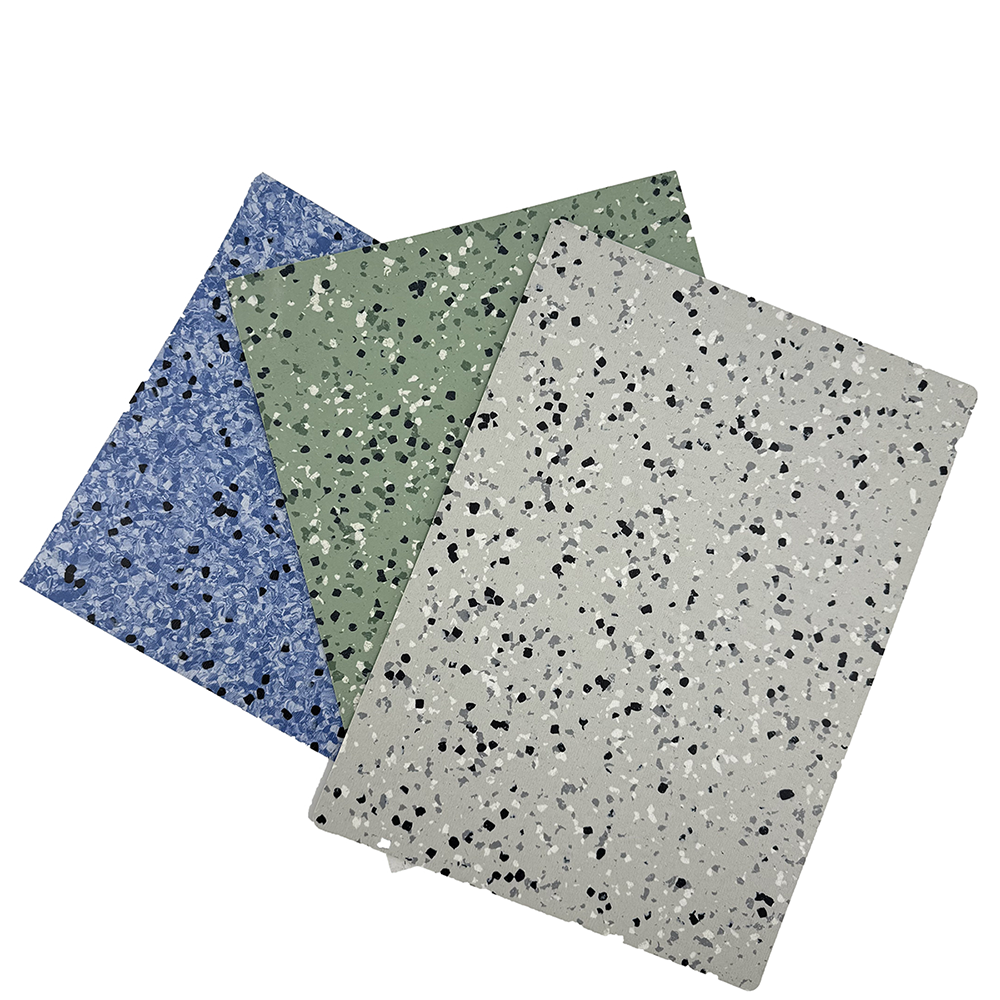
Anti-static PVC Floor ESD Tiles
Product Description
ESD vinyl flooring is widely used in clean rooms, manufacturing & assembly workshops
of electronic products, hospitals, data centers & computer rooms,
and other areas that require an anti-static environment. There are
two types of ESD vinyl flooring: ESD tile and ESD sheet. Both tile
and sheet are homogeneous structures, with electronic resistance
meeting both conductive (10^4-10^6Ω) and static-dissipative
(10^6-10^9Ω) requirements.
How Static-Control Flooring Provides a Path to Ground
In the manufacturing process, ESD floor tiles are loaded with
conductive elements, such as carbon, graphite or particles coated
with metals, that provide electrical conductivity. When the floor
becomes electrically charged, these conductive elements act as an
electrical chain, conducting electricity from the surface through
its entire thickness.
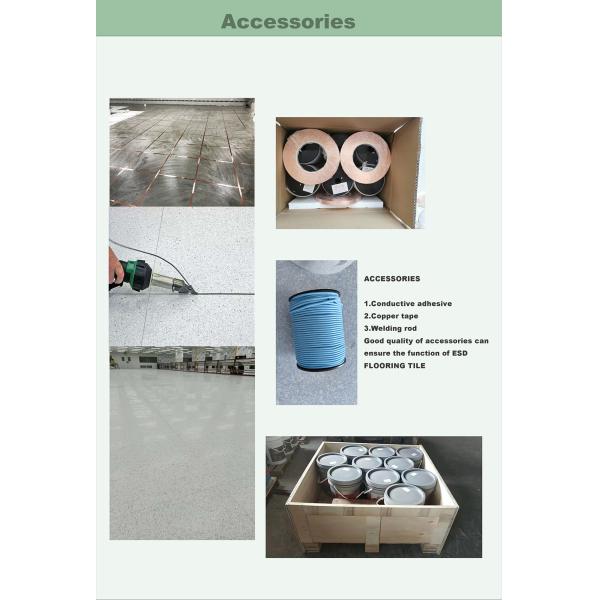
Static-control flooring is installed over an electrically
conductive underlayment, such as conductive copper foils or
carbon-loaded adhesive. The underlayment forms a conductive ground
plane that unifies all contiguously-installed tiles in the room.
Copper grounding strips, attached to the underlayment, are
connected to either an electrical outlet or an earth ground such as
a steel I-beam or grounding rod. This electrical connection allows
static to complete its circuit and flow safely to ground.
The static generated when people walk on the ESD floor flows at a
controlled rate through the conductive elements in the floor,
across the underlayment, to the copper strips, to ground. Instead
of remaining on the floor's surface or moving through humans to
whatever they touch, static is drawn downward, toward ground, where
it can no longer cause damage.
Frequently Asked Questions
1. Why is ESD (Electrostatic Discharge) a problem?
Electronic components contain microelectronic parts that are highly
sensitive to minute changes in electrical current. They can be
damaged by a static discharge as low as 20 volts - well below the
human threshold for perception (3,500 volts). This can compromise
or destroy data in sensitive equipment used in hospitals, data
centers, and manufacturing facilities.
2. Why is static-control flooring needed?
When we walk on certain floors, friction generates a static charge
that stays on our body until we touch something, causing an
electrostatic discharge (ESD). In workplaces with sensitive
electronics, this discharge can damage components.
Static-protective flooring is essential for preventing these
damaging ESD events.




 Antistatic Table Mat ESD Antistatic Table Mat Rubber Mat For Electronic Workline

