Labor-saving Robotic Polishing Machine For Padlock
Cut the labor cost per padlock, remove die-cast parting lines and
deliver a plating-ready finish — on zinc alloy, brass and stainless
lock bodies.

The Padlock Production Challenge
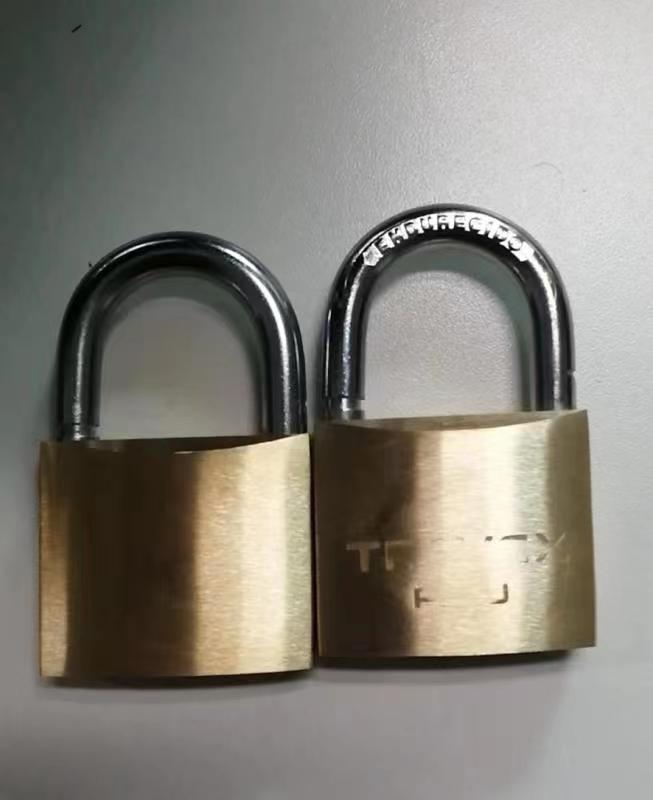
Padlocks are small parts with a big labor bill. The polishing cost
of a padlock is mostly people — operators holding small die-cast
bodies against wheels, part after part, shift after shift. When the
part is small, the value per part is small, and labor is not one
line in your cost sheet. It is the cost.
Our labor-saving robotic polishing machine for padlocks is built
around exactly this economics: multiple parts per cycle, a
programmed sequence that removes parting lines and levels the body,
and a finish that goes straight into your plating line — with a
fraction of the polishing headcount.
Why Polishing is the Most Expensive Step in Padlock Production
Small part, high labor share: A padlock body weighs grams, but it must be gripped, presented,
moved and inspected. Manual polishing of a small part spends more
time handling than polishing. Headcount is the dominant cost — and
the hardest cost to predict.
Die-cast parting lines must go before plating: Zinc alloy padlock bodies carry parting lines and gate residue at
the seam. Chrome or nickel plating amplifies every remaining line.
Removing them by hand is slow; missing them means rejects at
plating.
Two materials on one product: The body is zinc alloy, brass or aluminium; the shackle is
hardened steel. They need different pressure and different media —
one operator juggling two very different jobs on the same part.
Polishing sits between casting and plating: Casting and plating run on set cycles. Manual polishing does not.
When volume grows, the polishing bench becomes the bottleneck — and
the only way to grow output is to add people, which is the most
expensive way to grow output.
Frequently Asked Questions
Can one machine handle different padlock sizes, from small 25 mm
locks to large 80 mm padlocks?
Yes, within the stated part envelope. Each size range needs its own
multi-cavity fixture, and each model runs as a separate program.
Send us your model range and we will group it into the minimum
viable fixture set.
Can it polish the zinc body and the steel shackle on the same
machine?
Yes, but they run as separate stages with different media and
pressure. The shackle program and the body program are stored
independently, so both materials are handled in one cell.
How many padlocks are polished per cycle?
Multiple parts per cycle with the standard multi-cavity fixture.
The exact number depends on padlock size and body geometry — tell
us your main model and we will confirm the fixture layout.
How is the die-cast parting line removed without over-polishing the
body?
Parting line removal is a programmed stage with its own media and
pressure, followed by force-controlled surface leveling. Because
contact force is regulated, thin edges and small features are not
dug into — the seam is removed, the body geometry is kept.

 Labor Cost Reduction Robotic Polishing Machine for Brass Lock Production

