Ultrasonic Metal Welding Machine
Product Introduction
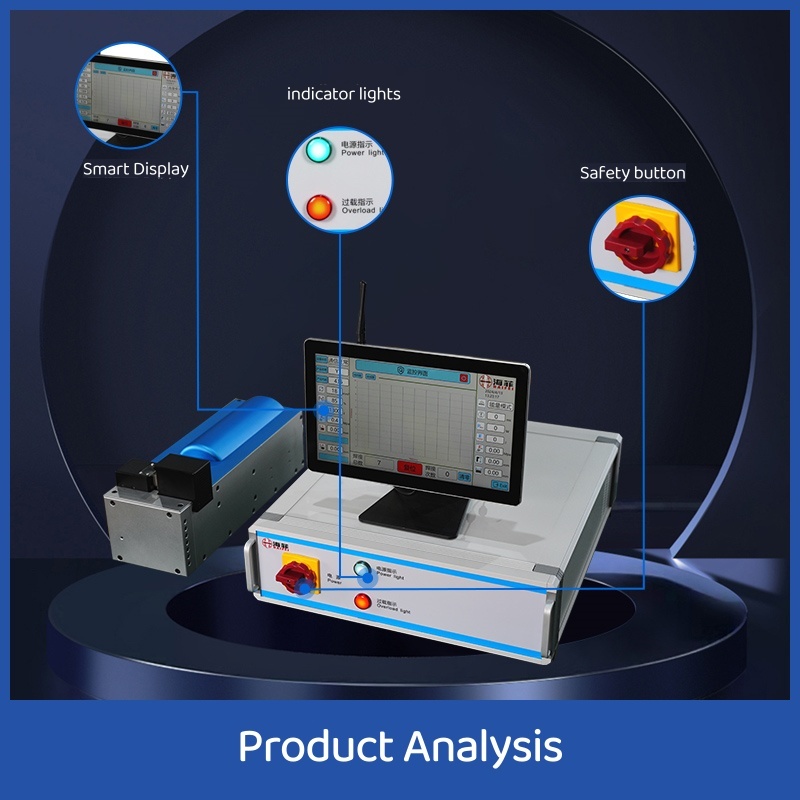
The HAIFEI Ultrasonic Metal Welding Machine is engineered for
solid-state metal bonding applications, particularly for copper,
aluminum, and multi-layer conductive materials. Unlike traditional
fusion welding methods that use heat and melting, ultrasonic
welding employs high-frequency mechanical vibration combined with
pressure to achieve molecular-level bonding between metal surfaces.
This process enables the joining of dissimilar or high-conductivity
materials without melting, flux, or filler materials, making it
ideal for electrical and new energy applications where conductivity
and reliability are paramount.
Typical applications include copper busbars, battery tabs, wire
harness terminals, and flexible conductive connectors.
Key Advantages of HAIFEI Ultrasonic Metal Welding Machine
- Reliable Welding for High-Conductivity Metals: Copper and aluminum are challenging to weld using conventional
methods due to their high thermal conductivity. Ultrasonic welding
provides a stable solution by avoiding heat accumulation and
ensuring consistent bonding quality.
- No Consumables Required: The process eliminates the need for solder, flux, or filler
materials, reducing production costs while eliminating
contamination risks associated with traditional soldering
processes.
- Minimal Thermal Impact on Materials: Since the process doesn't involve melting, there is no
heat-affected zone, helping maintain original conductivity,
mechanical strength, and material structure stability - crucial for
battery and power electronics applications.
- Stable and Repeatable Production: Once welding parameters are configured, the machine maintains
consistent quality across large production batches, reducing
operator dependency and improving production stability.
Typical Applications of Ultrasonic Metal Welding
- Copper Busbar Welding: Widely used in power distribution systems, battery packs, and
electrical cabinets. Ensures low-resistance, high-strength
connections for conductive copper assemblies.
- New Energy Battery Manufacturing: Used for welding battery tabs, nickel strips, and aluminum-copper
connections in EV battery packs and energy storage systems. Ensures
stable electrical performance and enhances battery safety.
- Wire Harness and Terminal Welding: Suitable for automotive wiring systems where multiple conductive
layers require high reliability and compact structure.
- Flexible Copper Connector Welding: Used in flexible conductive joints where vibration resistance and
electrical continuity are essential.
Frequently Asked Questions
What is an ultrasonic metal welding machine?
An ultrasonic metal welding machine uses high-frequency vibration
and pressure to join metals in a solid-state process without
melting. It is widely used for copper, aluminum, and conductive
materials in electrical and battery applications.
How does ultrasonic metal welding work?
It works by applying ultrasonic vibration to metal surfaces under
pressure. The vibration breaks surface oxides and creates atomic
bonding between metals, forming a solid weld without heat fusion.
What materials can be welded by ultrasonic welding?
It is mainly used for copper, aluminum, nickel, and other
non-ferrous conductive metals. It is especially effective for
dissimilar metal combinations such as copper-to-aluminum.
Is ultrasonic welding suitable for copper busbars?
Yes. Ultrasonic welding is widely used for copper busbar
connections because it provides low resistance, strong bonding, and
stable electrical performance without damaging conductivity.
What is the advantage of ultrasonic welding over soldering?
Unlike soldering, ultrasonic welding does not require flux or
filler materials. It avoids thermal damage, reduces electrical
resistance, and provides a cleaner and more reliable joint.
Can ultrasonic welding be used in battery production?
Yes. It is commonly used for battery tab welding, nickel strip
connections, and battery pack assembly in EV and energy storage
systems.


