Intelligent warehouse construction for manufacturing enterprises
often faces various operational challenges, including inefficient
space utilization, poor compatibility of multi-vendor hardware and
software, complicated storage and retrieval of heavy-duty and
special-shaped materials, insufficient data connectivity between
production lines and warehouse systems, unclear after-sales
responsibility division, limited adaptability to complex working
scenarios, and deviations between physical inventory and system
data. These issues affect the implementation effect and operational
efficiency of warehouse automation. With self-research and
development capabilities covering the whole industrial chain,
Huaheng provides targeted solutions for warehouse planning,
hardware and software development, customized adaptation and
full-cycle after-sales services, helping enterprises resolve
practical warehousing and logistics operational difficulties in a
standardized and systematic manner.
1. Solving compatibility failures and ambiguous after-sales
responsibilities of multi-brand equipment
Most warehouse projects adopt fragmented equipment and software
purchased from different suppliers, resulting in difficult
interface docking, high secondary development costs, and mutual
shirking of responsibilities during equipment failures, which
brings huge maintenance pressure to enterprises. Huaheng
independently develops and manufactures full-series core equipment
and system software, including stackers, telescopic forks, AGV/RGV
systems, conveyor lines, WMS warehouse management systems, and WCS
warehouse control systems. The in-depth adaptation of mechanical,
electrical and control software eliminates third-party docking
risks, unifies problem handling standards for the entire system,
avoids multi-party responsibility disputes, and ensures the
collaborative and stable operation of the whole intelligent
warehousing system.
2. Solving low warehouse space utilization and high land cost
pressure
Traditional flat warehouses occupy excessive channel space and have
limited storage capacity, leading to wasted plant space and
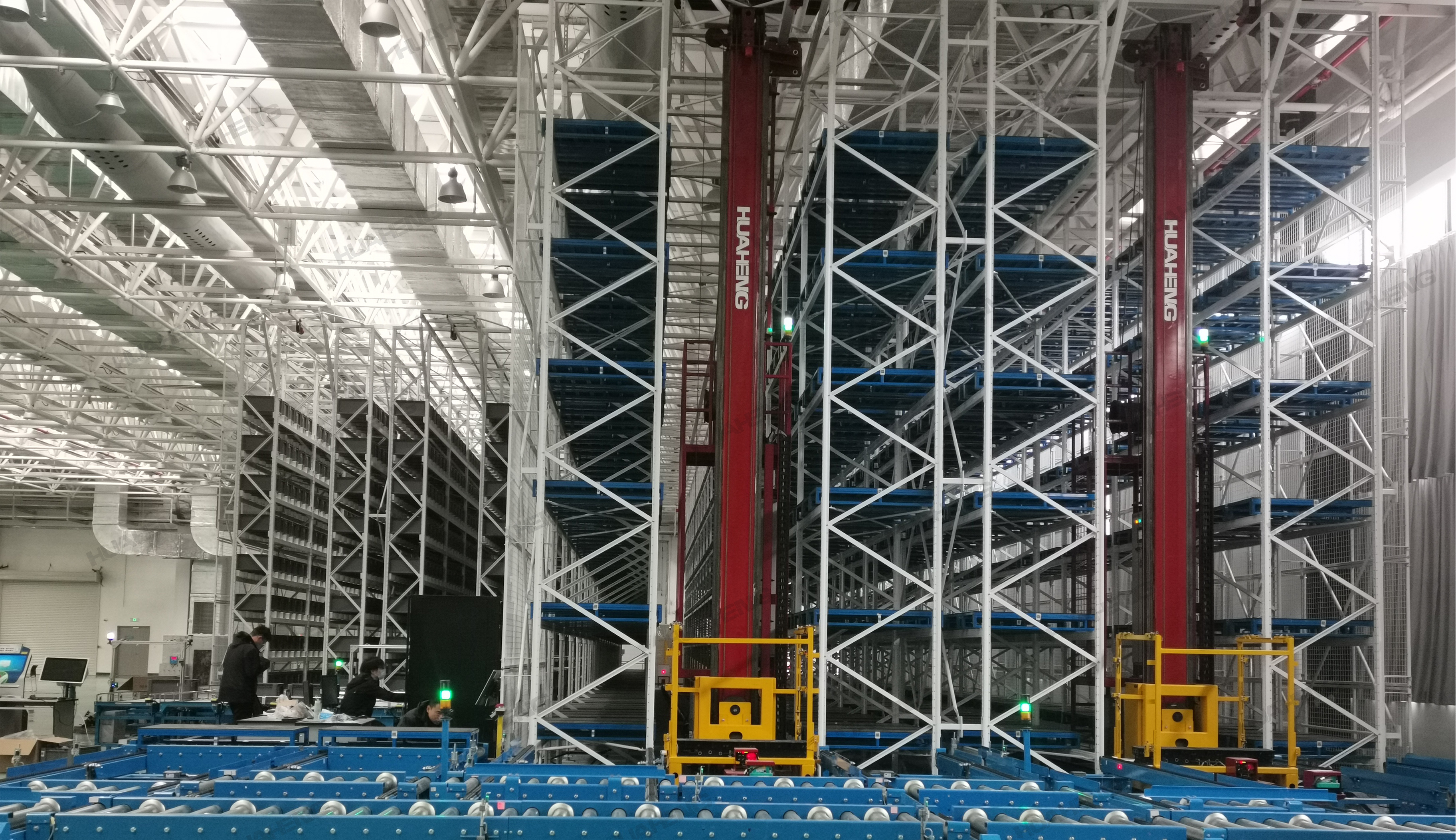
increased expansion costs. Huaheng intelligent ASRS automated
storage and retrieval system makes full use of vertical plant
space. Equipped with self-developed telescopic forks and
double-deep storage solutions, it greatly improves storage density
and multiplies warehouse space utilization compared with
traditional manual warehouses. For narrow-channel working
scenarios, we provide compact ultra-narrow fork solutions to
maximize the storage potential of existing plants and effectively
reduce customers’ additional investment in plant expansion.
3. Solving storage and retrieval difficulties for heavy-duty,
ultra-long, special-shaped materials and special working conditions
Industrial materials such as transformers, aluminum profiles,
ceramics, copper-clad plates and coiled materials have special
storage requirements including heavy load, ultra-long size, easy
deformation, scratch resistance, anti-static treatment, as well as
high temperature, dust and clean environment adaptation, which
cannot be met by standard warehouse equipment. Huaheng provides
non-standard customized telescopic forks and special load-bearing
accessories for special scenarios. Extended forks solve the
vibration and offset problems of ultra-long materials; V-shaped
special forks adapt to coiled material storage; anti-static and
anti-scratch customized accessories protect plate materials from
damage. With structural simulation analysis and full-load fatigue
tests, the system maintains high positioning accuracy under
long-stroke and heavy-duty operation, reduces material damage rate,
and adapts to various complex on-site working conditions.

4. Solving data isolation and inconsistent inventory data between
production lines and warehouses
In most enterprises, production and warehouse systems operate
independently, relying on manual material handling and manual data
entry, resulting in delayed inventory information and serious
inconsistency between actual and system inventory data. Huaheng WMS
and WCS systems support seamless docking with upstream ERP and MES
production systems, realizing data and instruction interconnection
among production stations, conveyor lines, stereoscopic warehouses
and AGV handling equipment. The whole material circulation process
realizes digital traceability. Combined with visual dashboards and
digital twin technology, real-time monitoring of inventory status
and equipment operation is realized, and automatic inventory
checking effectively avoids manual entry errors, building a
closed-loop digital logistics system covering production,
warehousing and outbound delivery.
5. Solving high failure rate and poor long-term stability of core
components
As high-frequency moving core components of stereoscopic
warehouses, traditional telescopic forks are prone to increased
mechanical clearance, structural deformation and positioning
deviation after long-term reciprocating operation, easily causing
equipment shutdown and affecting overall production efficiency.
Huaheng optimizes the stress structure of core executing components
through finite element simulation, adopts integrated precision
processing technology, and conducts full-load durability tests
before factory delivery to control wear and deformation during
long-term operation and ensure stable repeated positioning
accuracy. Meanwhile, we build a nationwide service network with
7×24-hour technical support. Remote online diagnosis and on-site
engineer services greatly shorten the fault processing cycle and
reduce production losses caused by warehouse shutdown.
6. Solving low efficiency and high labor management risks of
traditional manual warehousing
Manual warehousing is characterized by low inbound and outbound
efficiency, high labor intensity, and high operational risks in
harsh and high-risk working environments. Huaheng integrated
intelligent warehousing solution realizes full-process automation
of material warehousing, storage, sorting and outbound delivery,
replacing repetitive manual handling work. It supports unattended
dark factory operation with stable and controllable operation
rhythm, eliminates human operation errors, meets the needs of
continuous and automated production, and releases human resources
for high-value production and management posts.


