| Sign In | Join Free | My infospaceinc.com |
|
| Sign In | Join Free | My infospaceinc.com |
|
| Categories | Laboratory Ultrapure Water System |
|---|---|
| Model Number: | JC-1T1000/D |
| Voltage: | power supply 380V/440 |
| Payment Terms: | T/T |
| Dimensions: | communicate |
| Operating Temperature: | 5-50 degrees Celsius |
| Price: | comminicate |
| Power Source: | Electricity |
| Supply Ability: | comminicate |
| Model: | WD-1000 |
| Material: | Stainless Steel |
| MOQ: | 1 |
| Delivery Time: | comminicate |
| Capacity: | filter, water production 60 ton |
| Place of Origin: | China |
| Installation: | communicate |
| Packaging Details: | comminicate |
| Desalination Method: | Industrial large-scale EDI ultrapure deionized water equipment |
| Certification: | CE |
| Brand Name: | nettronics |
| Water Source: | Ultrapure water |
| Company Info. |
| Dongguan Jingchuang Environmental Protection Equipment Co. |
| Verified Supplier |
| View Contact Details |
| Product List |
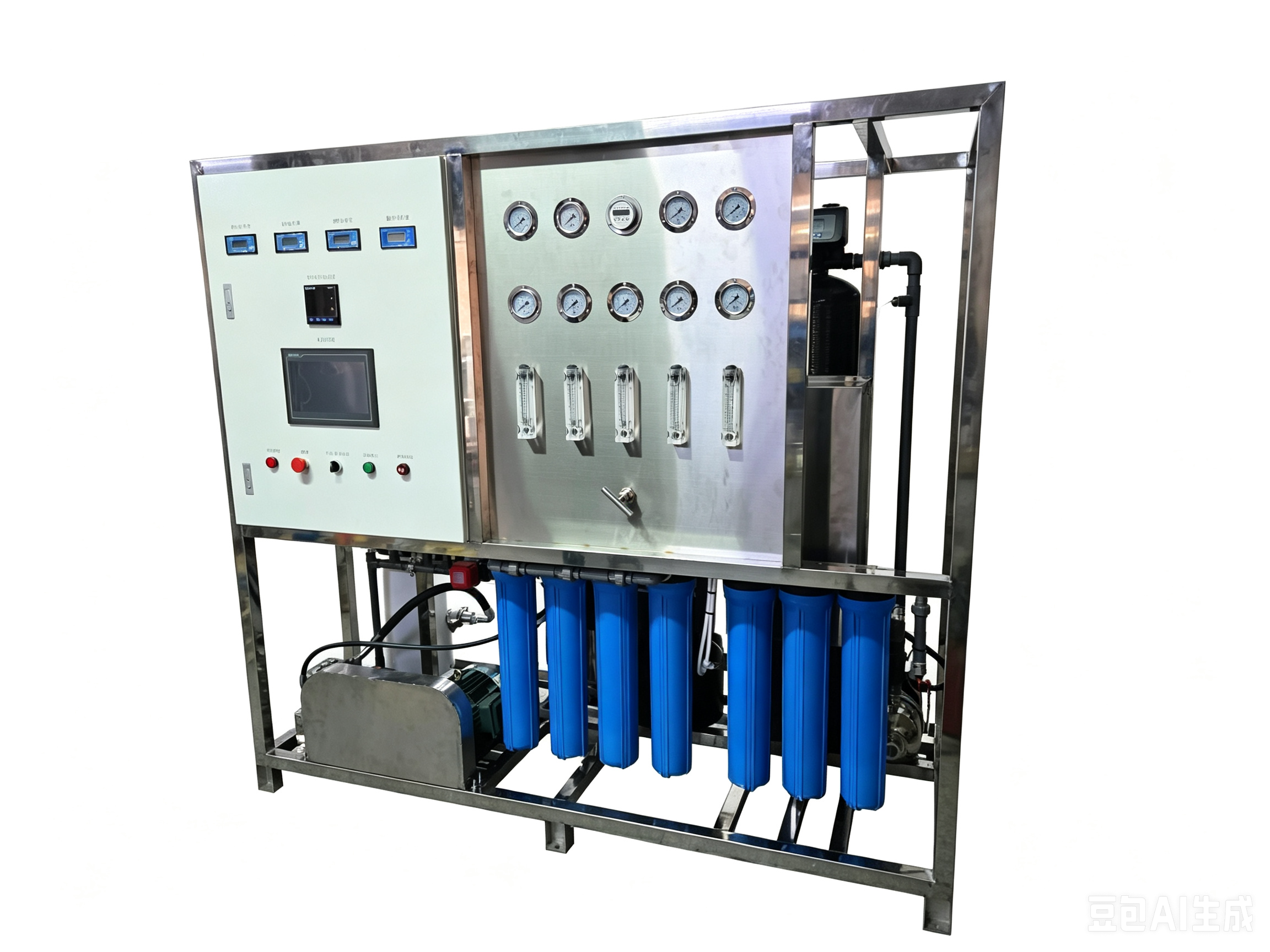
Overview of the Process for Producing Ultrapure Water from Seawater
I. Core Definitions
Seawater Desalination: The removal of large amounts of salt,
suspended solids, and microorganisms from seawater to produce
low-salinity fresh water.
Ultrapure Water: Water from which almost all ions, particulates,
organic matter, and bacteria have been removed; it has a
resistivity of ≥15–18 MΩ·cm and meets water quality standards for
laboratories, electronics manufacturing, boilers, and high-end
marine equipment.
Seawater cannot be converted directly into ultrapure water; it
requires multi-stage processing. The mainstream process flow is:
Pretreatment + First-stage Seawater Reverse Osmosis (SWRO) +
Second-stage Reverse Osmosis + EDI (Electrodeionization) for deep
desalination (the most common integrated solution).
II. Complete Process Flow
1. Seawater Pretreatment (Upstream filtration to protect membrane elements)
Seawater contains numerous impurities and has a salt content of 30,000–40,000 mg/L; purification is essential:
1. Water Intake & Sedimentation Tank: Settles out silt, sand,
seaweed, and floating debris.
2. Dosing System: Adds antiscalants, biocides, and flocculants to
inhibit marine biological growth and calcium carbonate scaling.
3. Multi-media Filter + Activated Carbon Filter: Removes colloids,
organic matter, and residual chlorine.
4. Precision Security Filter (5μm): Traps fine particles to prevent
scratching of the reverse osmosis membranes.
2. First-stage Seawater Reverse Osmosis (SWRO – The core of desalination)
A high-pressure booster pump pressurizes the seawater to 55–70 bar, forcing it through specialized seawater reverse osmosis membranes:
- Permeate (Product Water): Desalinated water with a salt content
of 300–500 mg/L.
- Concentrate (Brine): High-salinity brine; can be discharged into
the sea or processed for salt recovery.
Function: Removes over 99% of sodium chloride, completing the basic
desalination step; at this stage, the water is merely desalinated
water and does not yet meet ultrapure standards. 3. Secondary
Reverse Osmosis (RO – Preliminary Purification)
Permeate from the primary stage enters the secondary low-pressure
RO unit to further remove residual calcium and magnesium ions as
well as trace salts:
Product water conductivity is reduced to below 5 μS/cm,
significantly lowering ion content and serving as the feed source
for the ultrapure water stage.
4. EDI (Electrodeionization) Deep Refining (Core Ultrapure Water Stage)
Continuous deep desalination without the need for acid/alkali
regeneration:
Secondary RO permeate flows into the EDI module, where trace anions
and cations are separated under the influence of an electric field;
Output water resistivity stabilizes at 15–18.25 MΩ·cm, meeting
standard ultrapure water specifications.
5. Terminal Polishing Treatment (Optional for High-End Ultrapure Water)
Polishing mixed-bed resin, ultrafiltration, UV sterilization, and microporous terminal filtration: removes trace TOC, bacteria, and micro-particles; suitable for chip manufacturing, laboratories, and medical applications.
III. Key Equipment Parameters (Standard 20 tons/day Marine/Land-based Model)
1. Feedwater: Seawater TDS 35,000 mg/L;
2. Primary seawater desalination rate: ≥99.2%;
3. Secondary RO desalination rate: ≥98%;
4. EDI output water resistivity: 15–18.2 MΩ·cm;
5. System recovery rate: 40%–55% overall;
6. Operating energy consumption: Higher energy demand in the
seawater stage; power consumption is 4–6 kWh per ton of product
water.
IV. Application Scenarios
1. Cooling water for high-end marine boilers and precision
instruments;
2. Process water for island-based photovoltaic facilities and
small-scale semiconductor plants;
3. Water supply for offshore scientific research laboratories and
medical equipment;
4. Makeup water for large high-pressure boilers on islands. V.
Process Advantages
1. Employs a fully physical separation process; generates no large
volumes of acidic or alkaline waste liquid; environmentally
friendly and easy to maintain.
2. Modular design; customizable for capacities of 5, 20, or 50 tons
per hour.
3. Fully automated operation with automatic membrane module
flushing to minimize scaling and fouling.
4. Lower energy consumption and a smaller footprint compared to
conventional distillation methods.

|
 Reverse Osmosis Seawater Desalination And Ultrapure Water System
Containerised Reverse Osmosis Seawater Desalination System
1000L/H Box-Type Reverse Osmosis Seawater Treatment System
Industrial Deionised Water Purification System
Teaching Small Scale Desalination Demonstrator
Stainless Steel Laboratory Ultrapure Water Machine 40l/h 220v
Reverse Osmosis RO Pure Water Equipment Fully Automatic Integrated
400w Laboratory Ultrapure Water System Water Output 30l/Hour
School Studies Water Desalination Machine Producing 3 Tons/Day Water
Box Type Laboratory Ultrapure Water System 500L/H 750w
Reverse Osmosis Seawater Desalination And Ultrapure Water System
Containerised Reverse Osmosis Seawater Desalination System
1000L/H Box-Type Reverse Osmosis Seawater Treatment System
Industrial Deionised Water Purification System
Teaching Small Scale Desalination Demonstrator
Stainless Steel Laboratory Ultrapure Water Machine 40l/h 220v
Reverse Osmosis RO Pure Water Equipment Fully Automatic Integrated
400w Laboratory Ultrapure Water System Water Output 30l/Hour
School Studies Water Desalination Machine Producing 3 Tons/Day Water
Box Type Laboratory Ultrapure Water System 500L/H 750w

