| Sign In | Join Free | My infospaceinc.com |
|
| Sign In | Join Free | My infospaceinc.com |
|
| Categories | Metallurgy Processing Line |
|---|---|
| Brand Name: | hengyang |
| Model Number: | Lithium processing |
| Certification: | ISO9001 |
| Place of Origin: | China |
| MOQ: | 1 |
| Price: | 11000-35700USD/set |
| Payment Terms: | T/T |
| Supply Ability: | 30sets/month |
| Delivery Time: | 25-40 days |
| Packaging Details: | Negociated |
| OEM: | Accept |
| Capacity: | 5-300t/h |
| Application: | Battary |
| Condition: | New |
| Voltage: | Up to Buyer |
| Warranty: | 12 months |
| Company Info. |
| Zhengzhou Hengyang Industrial Co., Ltd |
| Verified Supplier |
| View Contact Details |
| Product List |
The Electrical Vehicle (EV) market is undergoing a revolution that
is transforming the transportation landscape using Lithium-Ion
battery technology. The demand for lithium ion battery is projected
to increase to 4900 Gwh in 2030 as compared to 1500 Gwh in 20241.
To meet this challenge, high purity Lithium Hydroxide and Lithium
Carbonate are required as essential materials to formulate these
batteries.
The primary sources of Lithium are either brine lakes (Salars) or
mineral deposits of mostly Spodumene ore. The Spodumene ore
contains up to 6 % weight Lithium and is extracted from the ground
in conventional mining operations that can be either underground
pit excavation or surface strip mining depending on the location of
the mineral lode.
Brine Applications
Brine is pumped from Salars into surface ponds for evaporation
(Figure 1). Initial brine contains Lithium Chloride ranging from
200 to 1,400 ppm. Impurities include Mg, K, SO4, Ca and others
precipitate out of solution before Lithium Chloride. A series of
ponds may be used and chemicals to adjust pH and precipitate out
impurities.
Application p a per Overview of Lithium Processing:
Evaporative Brine and Hengyang Technology When the brine is
concentrated to 6% Lithium, it is pumped into a processing plant
and converted to
Lithium Carbonate. The entire process can take up to 18 Months and
can be affected by the weather and rainfall.
Extraction of Lithium from brines is a less expensive method
compared to processing Spodumene or other ores due to the
requirements for mining, grinding, high energy costs to heat and
calcinate and the use of sulfuric acid for leaching. However, it
does require regional desert like conditions to allow for extended
evaporation and takes a much longer period to be processed from raw
brine to final product.
Besides the use of primary evaporation ponds, an adsorbent bed can
be used to remove Lithium by Direct Lithium Extraction (DLE). A
major drawback of this method is the need for fresh water to elute
the Lithium off of the adsorbent bed after it has been collected
from the brine. The feasibility of using an adsorbent bed can also
be affected by the ratio of contaminants in the brine such as high
levels of Magnesium compared to Lithium and how selective the
adsorbent material is to Lithium.

Lithium forecasts indicate demand will more than triple over the next decade. With the newest technology, backed by years of experience in brine and spodumene extraction methods, we are a full solutions partner for major lithium processing operations.
The two primary production methods for lithium – brine evaporation and hard rock (e.g. spodumene) processing
– come with their own unique set of challenges. We have more than 20 years of experience in providing cutting- edge technologies that cover both approaches for lithium production. Our capabilities include:
• Hard rock concentrators
• Hard rock concentrate refinery facilities
• Brine processing facilities
Lithium is found in very low concentration in igneous rocks. The
largest concentrations of lithium-containing minerals are found in
granitic pegmatites. The most important of these minerals are
spodumene (Li2O, Al2O3. 4SiO2) and petalite (Li2O, Al2O3. 8SiO2).
Spodumene has a theoretical Li2O content of 8.03%. Due to its high
lithium content, spodumene is considered the most important lithium
ore mineral. A typical run of mine ore can contain 1-2% Li2O, while
a typical spodumene concentrate suitable for lithium carbonate
production contains 6-7% Li2O (75% - 87% spodumene). Higher grade
concentrates with 7.6% Li2O and low iron content are used in
ceramics and more demanding industries.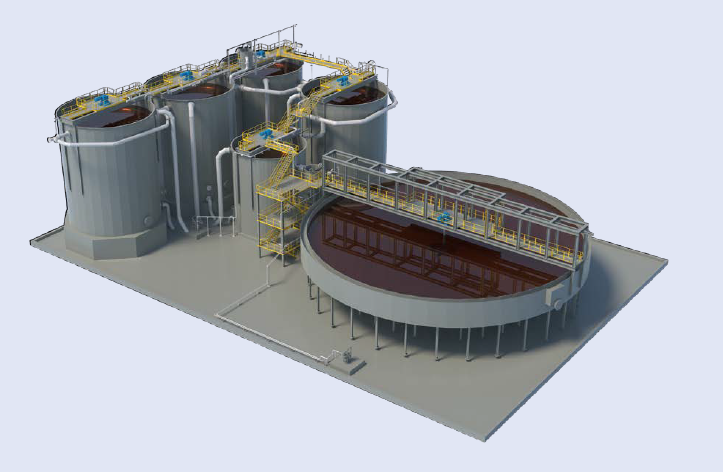

|
 Vermiculite Processing Plant
VERMICULITE: MINERAL AND EXFOLIATION PROCESS
Vermiculite Production Lines
Lithium Processing Technology Complete Solutions From Spodumene
Lithium Carbonate Process To Support Battery Materials Production
Durable Perlite Mining Process Machinery & Projects
Customize Capacity Perlite Production Process Line for Industrial Manufacturing and Material Handling
Fluorite Ore Dressing Production Line Mineral Processing Equipment
Fluorite Ore Flotation Process Line Providing Effective Mineral Recovery
Fluorite / Fluorspar Processing Line For Effective Fluorite Ore Crushing Grinding
Vermiculite Processing Plant
VERMICULITE: MINERAL AND EXFOLIATION PROCESS
Vermiculite Production Lines
Lithium Processing Technology Complete Solutions From Spodumene
Lithium Carbonate Process To Support Battery Materials Production
Durable Perlite Mining Process Machinery & Projects
Customize Capacity Perlite Production Process Line for Industrial Manufacturing and Material Handling
Fluorite Ore Dressing Production Line Mineral Processing Equipment
Fluorite Ore Flotation Process Line Providing Effective Mineral Recovery
Fluorite / Fluorspar Processing Line For Effective Fluorite Ore Crushing Grinding

